
Hiring guides
Practical Guides for Hiring Mechanics
Employer-focused guidance on defining the right profile, assessing real skill, structuring interviews and recruiting mechanics internationally.

Start here
Defining and finding the right profile

How to Recruit Mechanics from Abroad
A step-by-step framework for international mechanic recruitment, from profile definition to onboarding.
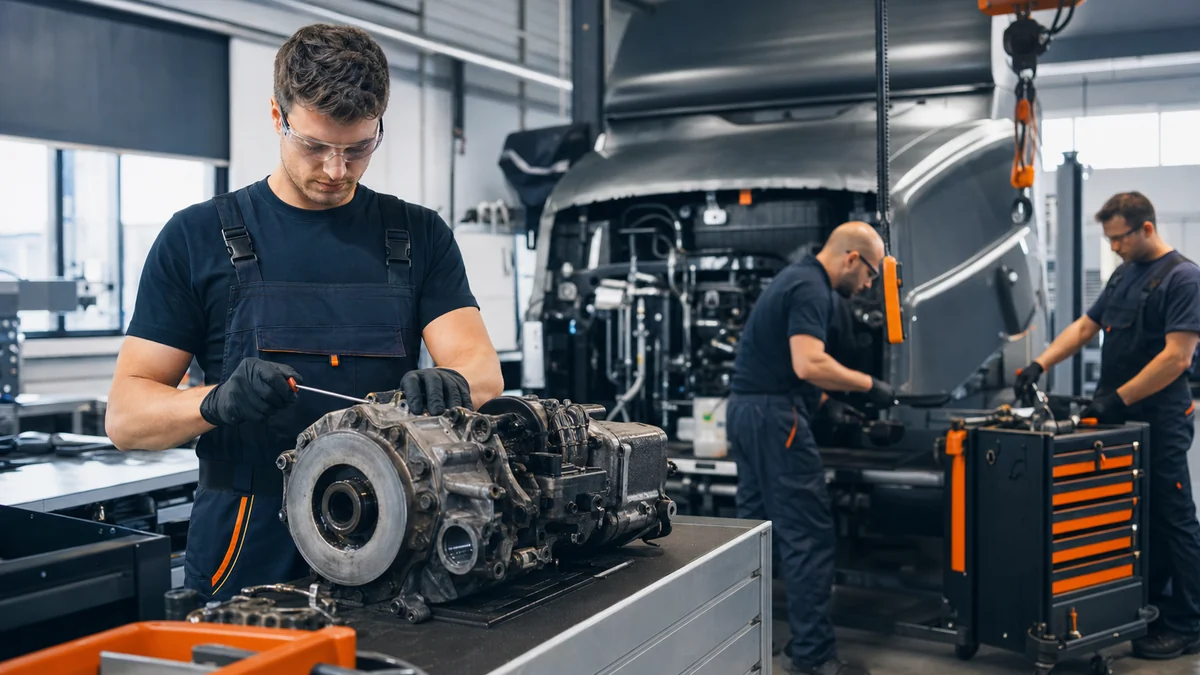
Recruiting Mechanics from the Western Balkans
What to expect, what to verify and what nobody can promise you about the region.
International Mechanic Onboarding
Turning a signed contract into a productive team member without losing them in month three.
Assessment
Evaluating skill before you commit

How to Assess an Automotive Mechanic
A practical framework for separating genuine competence from a well-written CV.

Truck Mechanic Interview Questions
Questions that reveal real commercial vehicle experience — and the answers to listen for.
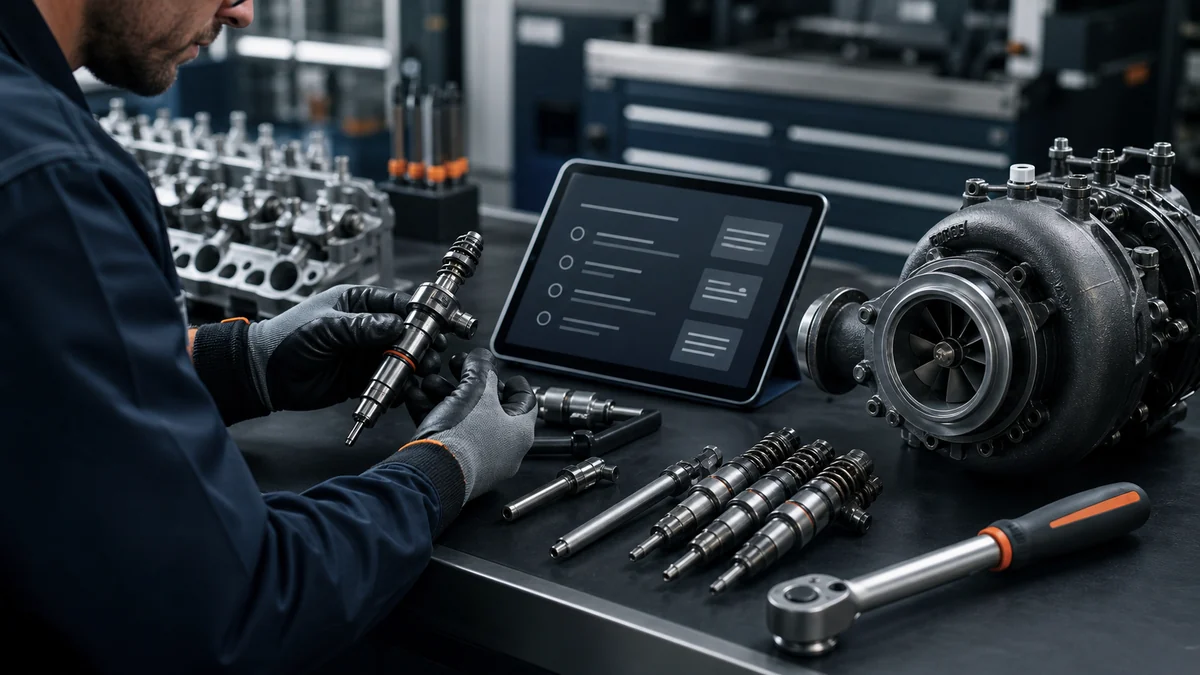
Diesel Mechanic Skills Checklist
A concrete checklist covering injection, turbo, emissions and overhaul competence.
Mechanic Practical Skills Test
How to design a fair, informative hands-on assessment that respects the candidate's time.
How to Assess Industrial Machinery Mechanics
Evaluating precision, alignment discipline and root cause thinking.

How to Hire Heavy Equipment Mechanics
What to prioritise when recruiting for hydraulics, field service and plant maintenance.
Comparisons
Choosing between similar profiles
Automotive Mechanic vs Mechatronics Technician
Two profiles that look interchangeable on paper and are not in practice.
Read guideTruck Mechanic vs Diesel Mechanic
Overlapping titles covering genuinely different day-to-day work.
Read guideHow to Reduce Fleet Maintenance Shortages
Structural approaches when recruiting alone is not closing the gap.
Read guideHow to use them
The sequence these guides follow
Technical recruitment fails in a predictable order, and these guides are arranged to match it. Most employers arrive at the assessment stage without having done the definition stage, which is why assessment then feels harder than it should.
If you are starting from scratch, work through them in order. If you already have a vacancy open and it is attracting the wrong people, the problem is almost always upstream — go back to profile definition before rewriting the advert again.
Define
Pin down the specialization, equipment and systems before writing anything.
Advertise
Describe real work, shift patterns and language honestly.
Assess
Test method and safety judgement, not only the right answer.
Onboard
Plan the arrival, not only the hire.
Scope
What these guides deliberately do not cover
We write about what employers can control: defining roles, assessing skill, structuring interviews and onboarding people properly. We stay out of areas where confident-sounding generic advice does real damage.
We do not give legal, immigration or work-permit advice. Those requirements depend on nationality, destination country, occupation and current regulation — all of which change, and none of which a website can responsibly generalise about. Where a guide touches those areas it tells you what to plan for and who to ask, not what the answer is.
We also avoid publishing salary benchmarks and market statistics we cannot verify. Numbers that look authoritative but are invented are worse than no numbers, because they get used in real decisions.
- No legal or immigration advice
- No guaranteed processing timelines
- No invented salary or market statistics
- No claims about candidate availability
- No advice on circumventing regulation
- Sources listed where external data is used
Choosing a guide
Which guide answers which situation
| Your situation | Start with | Then read |
|---|---|---|
| A vacancy has been open for months with no suitable applicants | Reducing maintenance shortages | How to recruit mechanics from abroad |
| Applications arrive but almost none fit | Recruiting from abroad (step 2) | The relevant mechanic profile page |
| You cannot tell which specialization you need | Mechanic profiles hub | Automotive vs mechatronics, or truck vs diesel |
| You have a shortlist and need to assess it | Designing a practical test | The profile-specific assessment guide |
| You are interviewing next week | Interview questions | How to assess an automotive mechanic |
| An offer is accepted and someone is relocating | Onboarding | Recruiting from the Western Balkans |
| Mechanics keep leaving within a year | Retention section | Onboarding, sections on the first 90 days |
How these guides are written
Method, sources and review
These guides are written for employers who have to fill a technical vacancy, not for search engines and not for candidates. That shapes what goes in and what stays out.
What we include: what employers can actually control — defining the role, writing a vacancy that filters, assessing method rather than outcome, structuring interviews, and planning the arrival. Where a claim is contestable, we say so rather than stating it flatly.
What we exclude: invented statistics, salary benchmarks we cannot verify, guaranteed processing timelines, and anything that reads as legal or immigration advice. A number that looks authoritative but is fabricated is worse than no number, because it ends up in real decisions.
Each guide carries a publication date and a last-reviewed date. Where external data or regulation is referenced, sources are listed so you can verify anything decision-critical yourself. Guides are revisited when the underlying practice changes, not on a fixed schedule.
- Employer-focused, not candidate-focused
- No invented statistics or salary benchmarks
- No legal, immigration or work-permit advice
- No guaranteed timelines for processes we do not control
- Sources listed where external data is used
- Publication and review dates on every guide
- Contestable claims flagged rather than asserted
FAQ
About these guides
Ready to start recruiting?
Explore mechanic profiles, publish your vacancy and manage applications in one platform.