Automotive MechanicsAutomotive MechatronicsTruck MechanicsDiesel MechanicsHeavy EquipmentView all mechanics
Automotive ServiceTransport & LogisticsFleet OperationsConstruction EquipmentView all industries
Western BalkansHiring GuidesAboutContact Explore Mechanic Profiles
English Deutsch

Industry

Recruit Mechanics for Transport and Logistics Companies

Find mechanic profiles for haulage, distribution and line-haul operations — truck, diesel and fleet specialists who keep commercial vehicles earning rather than waiting.
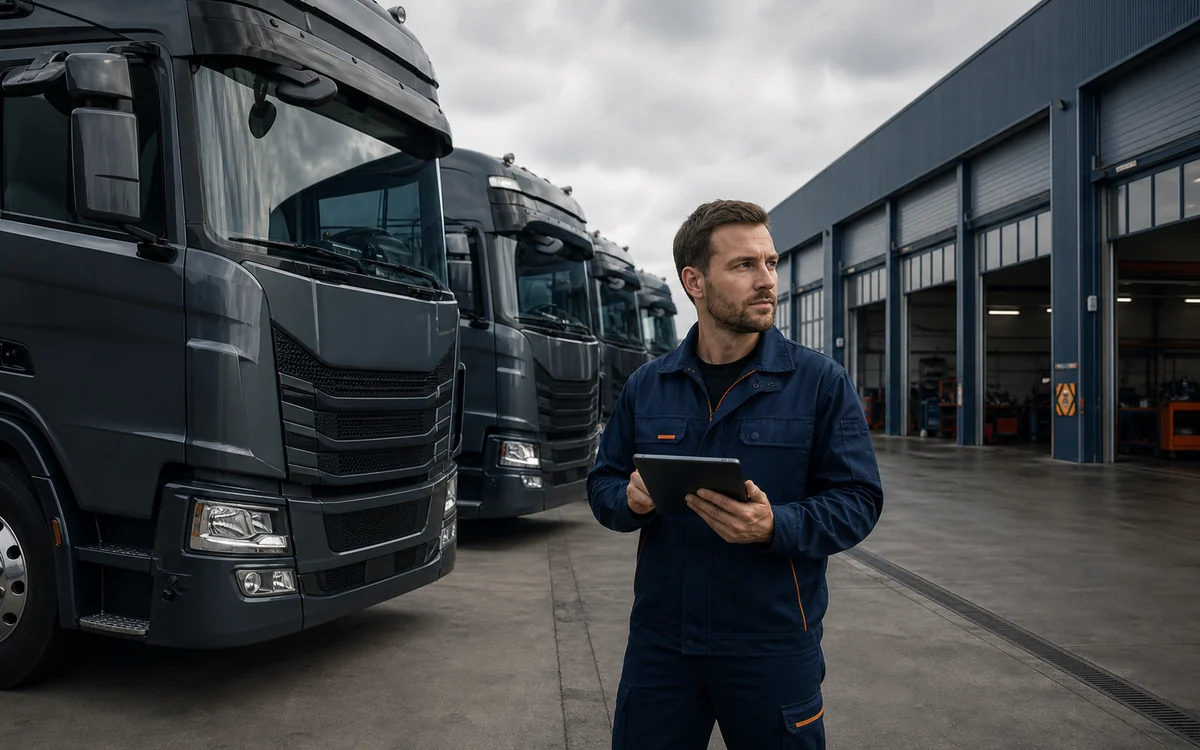
Transport and logistics fleet with an on-site maintenance workshop.

Industry challenges

Maintenance capacity decides how much freight you can commit to

In transport, the workshop is not a cost centre attached to the business — it is the constraint that determines how many vehicles are available to earn tomorrow morning.

Vehicles idle instead of loaded

Every truck waiting for repair is a route not covered, and in contract logistics that failure is visible to the customer immediately.

Driver hours wasted

Drivers paid to wait for a vehicle that is not ready represent a cost that never appears on the repair invoice.

Roadside breakdowns

Failures away from base multiply cost through recovery, delayed freight and emergency repair rates.

Deferred preventive servicing

When the workshop is behind, scheduled work slips first — and unplanned failures follow predictably.

Statutory inspection pressure

Technical inspection deadlines are fixed. Missing them takes vehicles off the road regardless of how full the order book is.

Difficulty scaling the fleet

Adding vehicles without adding workshop capacity simply moves the bottleneck rather than growing the business.

AdvertisementCandidate Force — explore mechanic profiles and publish vacancies.

The cost of downtime

What an idle truck actually costs

The visible cost of downtime is the repair. The larger cost is everything that stops around it: the route not run, the driver reassigned or idle, the customer commitment renegotiated and the penalty clause triggered.

For most operators the daily contribution of a working vehicle far exceeds the daily cost of the mechanic who keeps it available. That arithmetic is why in-house maintenance capacity is usually a margin decision rather than a cost decision.

Preventive maintenance shifts failures from unplanned to planned. A planned service happens overnight or on a scheduled day; an unplanned failure happens on a Tuesday with a full trailer, on a motorway, at emergency rates.

Working environments

Where your mechanics will work

Depot workshops

Multi-bay facilities attached to the operating centre, working around vehicle return times and often running evening or night shifts to prepare vehicles for the morning.

Mobile and roadside service

Service vans responding to breakdowns in the network. This requires independent judgement about what can be repaired safely on the hard shoulder versus what needs recovery.

Maintenance requirements

What transport fleet maintenance involves

Fleet maintenance in transport is governed by intervals, legal inspections and availability targets rather than customer appointments.

  • Scheduled servicing based on mileage or operating hours
  • Statutory technical inspection preparation and compliance
  • Brake system inspection, testing and adjustment
  • Tyre management and wear monitoring across the fleet
  • Emission system maintenance and fault resolution
  • Trailer inspection, coupling and braking systems
  • Tachograph and telematics related checks
  • Breakdown response and recovery coordination
  • Maintenance record keeping for compliance and resale
AdvertisementBalkan Recruiters — recruitment services for European employers.

Skills employers should verify

What to verify when hiring for a transport fleet

Balkan Mechanic does not certify candidates. Use this as the basis for your own screening.

  • Experience specifically on heavy commercial vehicles, not only cars
  • Air brake system competence — safety-critical in this sector
  • Familiarity with statutory inspection requirements
  • Emission aftertreatment diagnostic ability
  • Understanding of preventive maintenance scheduling
  • Willingness to work night or early shifts around vehicle availability
  • Availability for breakdown callouts, if required
  • Driver licence categories where road-testing is part of the role
  • Documentation discipline for compliance records
  • Work authorization requirements for your country

Shift and emergency coverage

Plan the shift pattern before you advertise

This is the single biggest filter on who will accept your vacancy. Transport workshops typically need coverage outside the hours when vehicles are earning, which means evenings, nights or weekends. Candidates who discover this only at interview stage withdraw late and waste weeks. State the shift pattern, the callout expectation and how it is compensated directly in the job advert — clarity here consistently produces a smaller but far more committed applicant pool.

How recruitment continues

From vacancy to shortlist

Define the mechanic profile

Pin down the specialization, systems and experience level you need.

Explore available profiles

Review mechanic profiles that match your equipment.

Publish the vacancy

Describe the role, systems and shift requirements clearly.

Review details and applications

Assess candidate information and verify qualifications.

Continue through Candidate Force

Manage interviews and the rest of the workflow in one place.

FAQ

Frequently asked questions

If the work is deep repair on heavy vehicles, hire a truck mechanic. If the priority is keeping a mixed fleet available through planned maintenance, scheduling and records, a fleet mechanic fits better. Larger operations usually need both.
There is no universal ratio — it depends on vehicle age, annual mileage, how much work is outsourced and whether you run your own inspections. A practical starting point is to compare your current external maintenance spend and downtime cost against the fully loaded cost of an in-house role.
Most do, because maintenance happens when vehicles are not earning. Whether that means a full night shift or an early start depends on your operating pattern, but it should be decided and stated before recruiting.
For any modern fleet, very. Aftertreatment faults are a leading cause of derating and roadside failure, and resolving them requires understanding the control strategy rather than simply clearing fault codes.
Many will have experience with the manufacturers common across European transport. Verify brand experience individually rather than assuming it — diagnostic method transfers between brands more readily than manufacturer-specific software knowledge.
Confirm it explicitly. Some truck mechanics cover trailers comfortably; others have worked only on tractor units. If trailer braking, suspension and lighting are part of the role, say so in the vacancy.

Keep your fleet on the road

Explore profiles, publish your vacancy and manage applications in one structured platform.

Explore Mechanic Profiles