Automotive MechanicsAutomotive MechatronicsTruck MechanicsDiesel MechanicsHeavy EquipmentView all mechanics
Automotive ServiceTransport & LogisticsFleet OperationsConstruction EquipmentView all industries
Western BalkansHiring GuidesAboutContact Explore Mechanic Profiles
English Deutsch

Industry

Recruit Mechanics for Agricultural Machinery Companies

Find mechanic profiles for tractors, harvesters and farm equipment — specialists in hydraulics, diesel drivetrains and the field service that seasonal operations depend on.
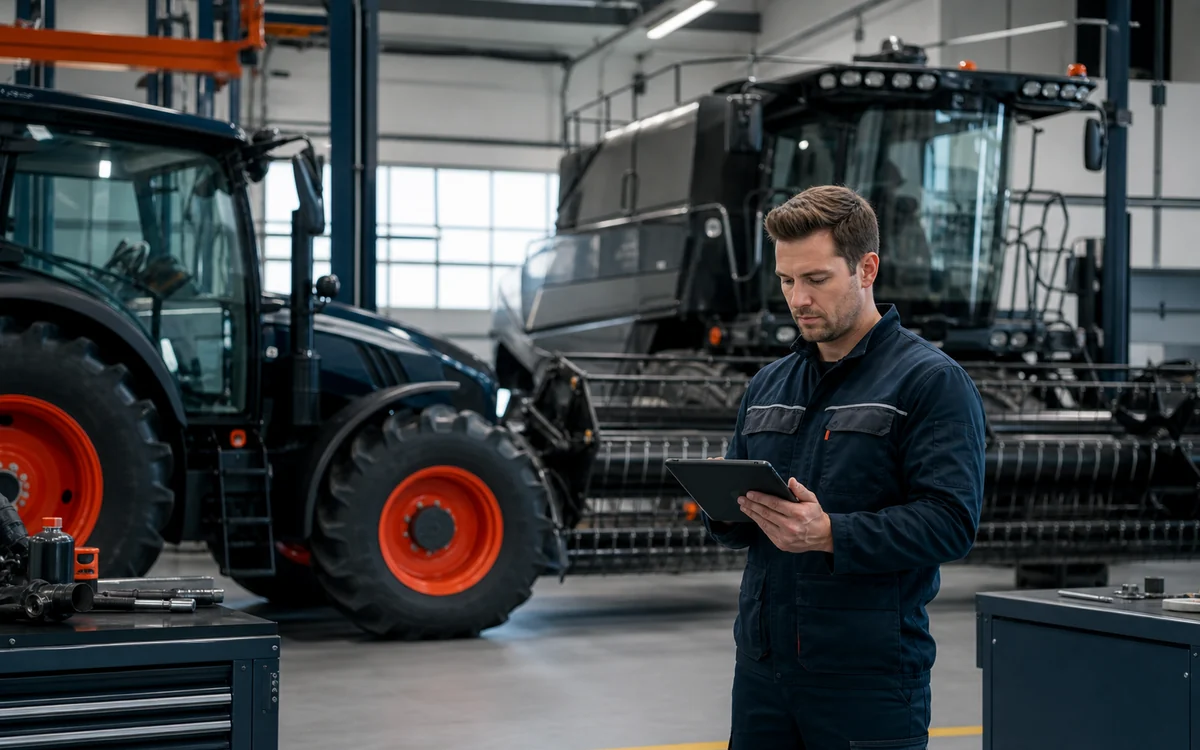
Agricultural machinery service facility with tractors and harvesters.

Industry challenges

Equipment fails during the weeks it cannot be spared

Agricultural machinery is used intensively for short, weather-dependent periods. A breakdown during harvest cannot be rescheduled to a quieter month, because there is no quieter month for that crop.

Seasonal peak failures

Machines used hard for a few weeks fail precisely when no replacement capacity exists anywhere in the region.

Crop loss from delays

Missing a harvest window has consequences that no repair discount can recover.

Remote field breakdowns

Equipment fails in fields far from any workshop, requiring genuine mobile repair capability.

Concentrated workload

Demand is compressed into short periods, making it difficult to justify and retain year-round specialist staff.

Growing electronic complexity

GPS guidance, section control and electronic management now sit alongside traditional mechanical systems.

Wide equipment variety

A single operation may run tractors, harvesters, sprayers and implements from many different manufacturers.

AdvertisementCandidate Force — explore mechanic profiles and publish vacancies.

The cost of downtime

Why seasonal downtime carries disproportionate cost

Most industries can absorb a machine being unavailable for a few days by rescheduling work. Agriculture often cannot, because the operation is tied to crop maturity and weather rather than to a production plan.

A combine harvester unavailable for three days in the wrong week can affect the yield and quality of an entire harvest. The cost is measured against the crop, not against the repair.

This asymmetry is why pre-season inspection and overhaul work is so valuable, and why operations that invest in winter preparation experience markedly fewer peak-season emergencies.

Working environments

Where your mechanics will work

Farm and dealer workshops

Winter-weighted work covering overhaul, implement refurbishment and pre-season preparation, in controlled conditions with proper lifting and diagnostic equipment.

Field service during season

Mobile repair in the field under time pressure, often at distance and in poor light or weather. Requires independence and the ability to improvise safely.

Maintenance requirements

What agricultural machinery maintenance involves

The annual cycle alternates between planned winter preparation and reactive peak-season response.

  • Pre-season inspection and overhaul programmes
  • Hydraulic system diagnosis and repair
  • Diesel engine servicing and fault resolution
  • Transmission, PTO and driveline maintenance
  • Harvesting mechanism and threshing system repair
  • Implement, linkage and attachment servicing
  • Sprayer system maintenance and calibration
  • GPS guidance and precision system diagnosis
  • Emergency field repair during peak periods
AdvertisementBalkan Recruiters — recruitment services for European employers.

Skills employers should verify

What to verify when hiring for agricultural machinery

Balkan Mechanic does not certify candidates. Use this as the basis for your own screening.

  • Equipment types and manufacturers previously serviced
  • Hydraulic diagnostic competence, central to farm machinery
  • Harvester experience specifically, if that equipment is in your fleet
  • Familiarity with precision agriculture and guidance systems
  • Willingness and ability to perform remote field repairs
  • Welding and fabrication skills for implement repair
  • Realistic understanding of seasonal workload intensity
  • Driver licence and ability to move machinery on public roads
  • Language level for manufacturer documentation
  • Work authorization requirements for your country

Shift and emergency coverage

Managing the seasonal pattern honestly

Seasonality is the defining feature of this role and hiding it backfires. Peak periods can mean very long days for several consecutive weeks, followed by much quieter months. Some operations balance the year with winter overhaul programmes; others combine the role with construction or transport equipment work. Describe the actual annual pattern, the peak-period expectations and how those hours are compensated in the vacancy itself — candidates who accept the role understanding the rhythm stay far longer than those who discover it during their first harvest.

How recruitment continues

From vacancy to shortlist

Define the mechanic profile

Pin down the specialization, systems and experience level you need.

Explore available profiles

Review mechanic profiles that match your equipment.

Publish the vacancy

Describe the role, systems and shift requirements clearly.

Review details and applications

Assess candidate information and verify qualifications.

Continue through Candidate Force

Manage interviews and the rest of the workflow in one place.

FAQ

Frequently asked questions

Many operations fill the winter with overhaul, implement refurbishment and preparation work that would otherwise be outsourced. Others share the role across neighbouring businesses or combine it with construction and transport equipment. Map the full annual workload before concluding the role cannot be full-time.
Frequently yes. Hydraulics, diesel engines and drivetrains carry over well. The genuine learning areas are power take-off systems, implement interfaces and harvesting mechanisms.
Worth asking about specifically. Combine and forage harvesters have threshing, separation and cleaning systems that differ substantially from tractor work, and general agricultural experience does not guarantee familiarity with them.
Increasingly important. GPS guidance, section control and yield monitoring are standard on newer equipment and affect operations directly when they fail. Ask what the candidate has actually configured or diagnosed rather than merely used.
During season, usually yes. Equip it properly — a mechanic sent to a distant field without the right parts and tools loses the day, and repeated experiences of that kind drive good people away.
Equipment types and brands, whether harvesters are included, the field-service expectation, the honest seasonal pattern and whether transport or accommodation is provided for remote work. These specifics filter far better than generic descriptions.

Be ready before the season starts

Explore profiles, publish your vacancy and manage applications in one structured platform.

Explore Mechanic Profiles