Automotive MechanicsAutomotive MechatronicsTruck MechanicsDiesel MechanicsHeavy EquipmentView all mechanics
Automotive ServiceTransport & LogisticsFleet OperationsConstruction EquipmentView all industries
Western BalkansHiring GuidesAboutContact Explore Mechanic Profiles
English Deutsch

Mechanic profile

Hire Truck Mechanics from the Western Balkans

Explore mechanic profiles with experience in commercial vehicles, diesel engines, brake systems, fleet maintenance and workshop diagnostics.
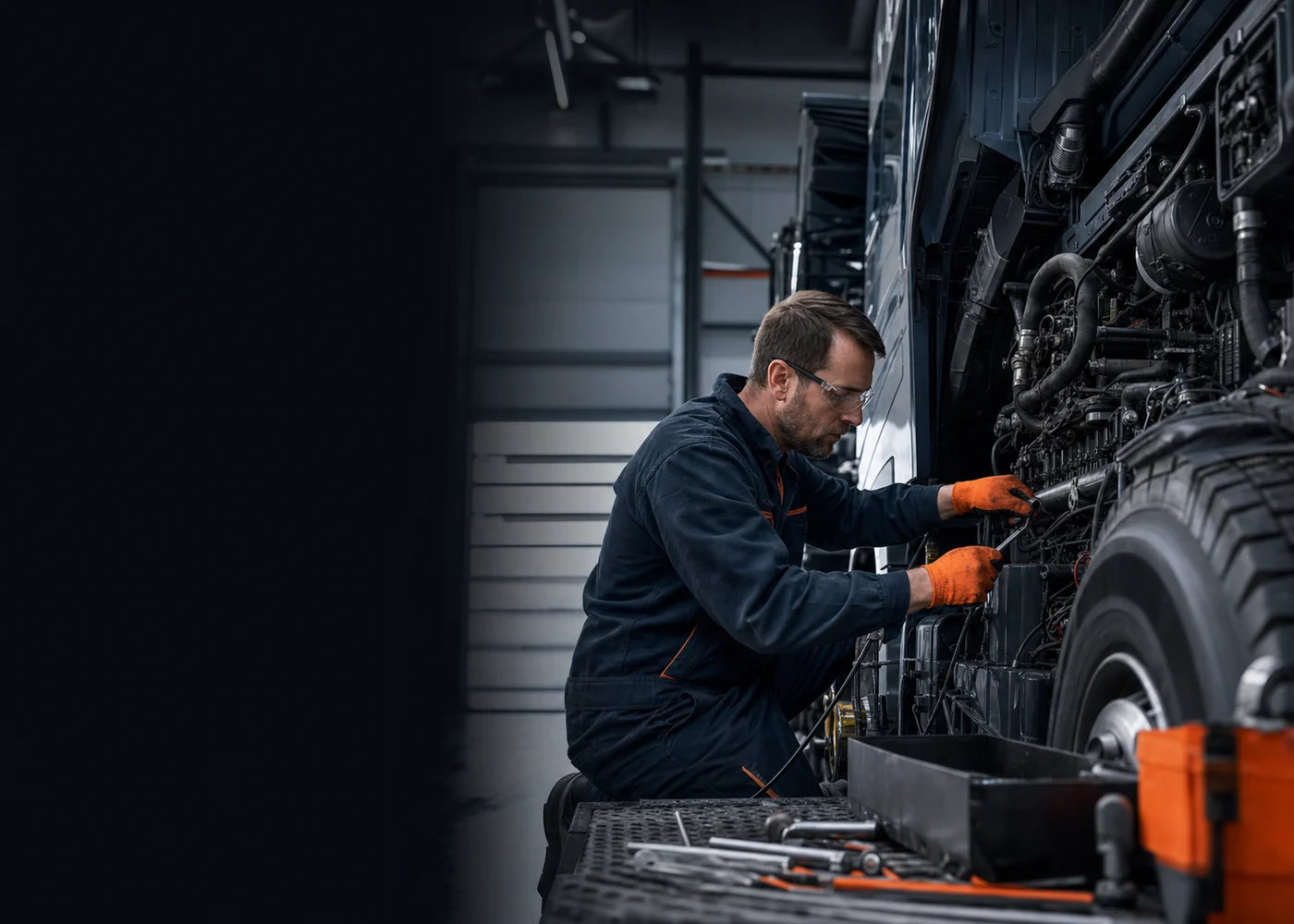
Truck mechanic servicing a heavy commercial vehicle.

The employer challenge

Every hour a truck sits in the workshop is an hour it earns nothing

Commercial vehicle workshops face a narrower talent pool than car workshops, and the consequences of an unfilled position land directly on fleet availability.

Fleet downtime

A truck off the road cannot carry freight. Unlike a passenger car, the lost revenue is measurable per day and contractually visible to customers.

Delayed maintenance

Scheduled servicing slips when the workshop is understaffed, and deferred work reliably turns into roadside breakdowns.

Shortage of diesel experience

Heavy diesel powertrains, aftertreatment and injection systems require depth that general automotive experience does not automatically provide.

Limited shift coverage

Fleets that run around the clock need workshop coverage outside office hours, which a thin team simply cannot sustain.

Overloaded workshops

Existing mechanics absorb overtime, and fatigue in safety-critical brake and steering work is a risk no operator wants.

High outsourcing costs

External commercial vehicle service is expensive and puts your turnaround times in someone else's queue.

AdvertisementCandidate Force — explore mechanic profiles and publish vacancies.

Role overview

What a truck mechanic actually does

A truck mechanic maintains and repairs heavy commercial vehicles — rigid trucks, tractor units and their trailers. The work centres on keeping vehicles roadworthy and legally compliant, which means diagnostics, scheduled servicing and repair across engine, driveline, braking, suspension and electrical systems.

The environment is different from a car workshop. Bays are taller, components are heavier, pneumatic tooling and lifting equipment are standard, and much of the diagnosis happens through manufacturer-specific systems on vehicles that may be a decade old or brand new.

Compared with an automotive mechanic, the truck mechanic works on air brake systems rather than hydraulic ones, on multi-axle configurations, and to inspection regimes governed by commercial vehicle regulation. A skilled car mechanic does not transfer to this role without retraining.

Compared with a diesel mechanic, the truck mechanic is vehicle-focused rather than engine-focused. A diesel specialist may rebuild engines across trucks, machinery and generators; a truck mechanic covers the whole vehicle, including chassis, brakes and trailer coupling.

You need a truck mechanic when your fleet consists of heavy commercial vehicles and the workload is continuous rather than occasional — typically once in-house servicing becomes cheaper and faster than outsourcing.

Typical responsibilities

  • Inspecting trucks and commercial vehicles for defects and compliance
  • Diagnosing mechanical, pneumatic and electrical faults
  • Servicing and repairing diesel engines and aftertreatment systems
  • Repairing and adjusting air brake systems
  • Maintaining suspension, steering and axle assemblies
  • Working on transmissions, clutches and differentials
  • Performing scheduled preventive maintenance
  • Recording service work and parts used
  • Road-testing repaired vehicles before release
  • Supporting fleet availability targets and turnaround times

Relevant systems and equipment

Systems a truck mechanic works with

Profiles may include experience with:

Diesel enginesAir brake systemsEBS & ABSHydraulic systemsPneumatic systemsManual & automated transmissionsDrive axles & differentialsAir suspensionEmission & SCR systemsTrailer couplingsDiagnostic devicesFleet maintenance software

What employers should verify

Check these before you hire a truck mechanic

Balkan Mechanic does not certify candidates. Use this list as the basis for your own screening and interviews.

  • Formal vocational qualification in commercial vehicle or automotive technology
  • Years of experience specifically on heavy commercial vehicles, not just cars
  • Vehicle categories and manufacturers previously serviced
  • Demonstrable air brake system knowledge — this is safety-critical
  • Diagnostic method and the systems the candidate has used
  • Experience with periodic technical inspection requirements
  • Driver licence categories, where road-testing is part of the role
  • Language level sufficient for service documentation and team communication
  • Shift availability and willingness to cover breakdown callouts
  • Work authorization requirements for your country
AdvertisementBalkan Recruiters — recruitment services for European employers.

How recruitment continues

From vacancy to shortlist

Define the mechanic profile

Pin down the specialization, systems and experience level you need.

Explore available profiles

Review mechanic profiles that match your vehicles and machines.

Publish the vacancy

Describe the role, systems and shift requirements clearly.

Review details and applications

Assess candidate information and verify qualifications.

Continue through Candidate Force

Manage interviews and the rest of the workflow in one place.

FAQ

Frequently asked questions

No. A truck mechanic maintains the complete commercial vehicle — chassis, brakes, driveline and electrics. A diesel mechanic specialises in the engine itself and may work across trucks, machinery and stationary equipment. The roles overlap on engine servicing but diverge everywhere else.
Often yes, and it is a common progression. The transferable base is diagnostics and general mechanical skill. The gaps are air brake systems, multi-axle configurations, heavier tooling and commercial vehicle inspection requirements. Plan for a structured retraining period rather than assuming an immediate transfer.
It depends on supervision. If an experienced foreman is present, a mechanic with two to three years of commercial vehicle experience can be productive quickly. For independent work, breakdown callouts or shift leadership, look for five years or more with evidence of complex fault diagnosis.
Not always, but it is valuable. If road-testing after repair is part of the role, the relevant licence category becomes a practical requirement. State this clearly in the vacancy — it materially changes which candidates fit.
Ask the candidate to describe a specific brake fault they diagnosed, the test procedure they followed and how they validated the repair. Vague answers on safety-critical systems are a meaningful signal. A short practical assessment is the most reliable check.
Many can, since trailer braking, suspension and lighting are closely linked to the tractor unit. Confirm it explicitly rather than assuming — some workshops separate trailer work into a dedicated role.
The combination is demanding: mechanical depth, diagnostic ability, safety-critical responsibility and often shift or callout availability. Employers consistently report it among the harder technical roles to recruit for.

Find Truck Mechanics through Candidate Force

Explore profiles, publish your vacancy and manage applications in one structured platform.

Explore Mechanic Profiles
