Automotive MechanicsAutomotive MechatronicsTruck MechanicsDiesel MechanicsHeavy EquipmentView all mechanics
Automotive ServiceTransport & LogisticsFleet OperationsConstruction EquipmentView all industries
Western BalkansHiring GuidesAboutContact Explore Mechanic Profiles
English Deutsch

Industry

Recruit Mechanics for Construction Equipment Companies

Find mechanic profiles for site machinery — hydraulic specialists, heavy equipment and construction machinery mechanics who keep plant working where the project needs it.
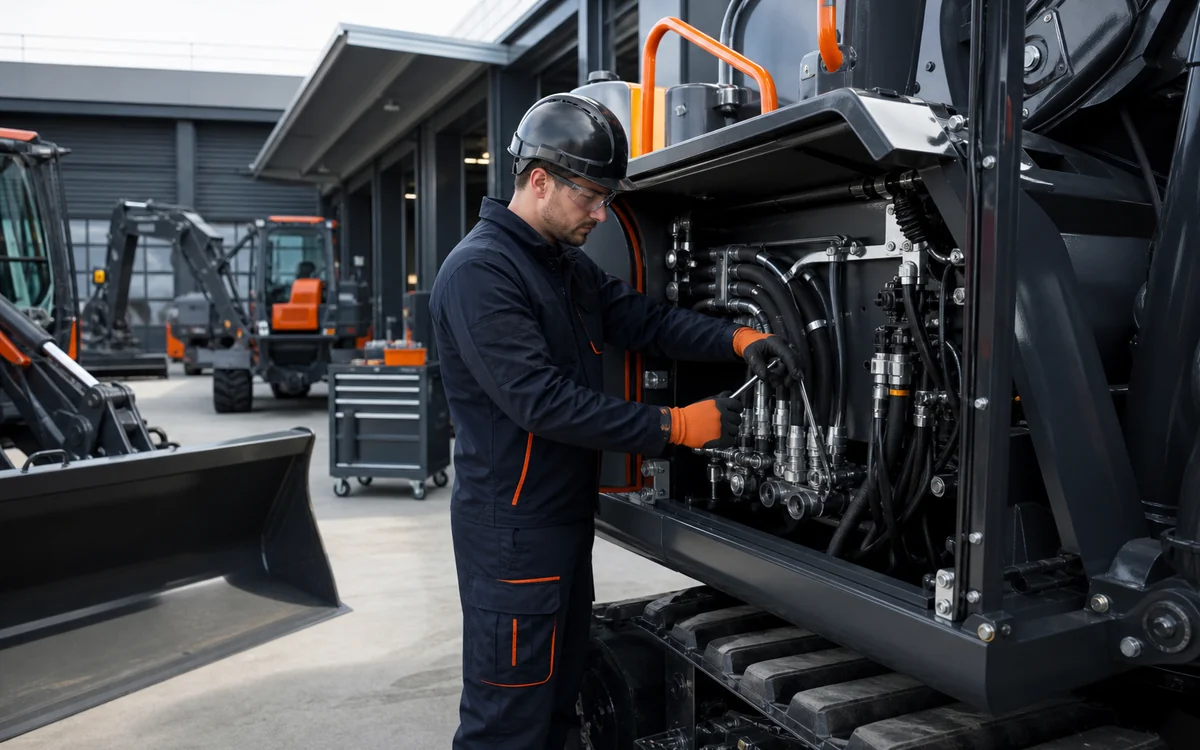
Construction equipment yard with on-site machinery service.

Industry challenges

Machinery downtime moves the critical path, not just the schedule

Construction programmes are sequenced. When a machine stops, every trade waiting behind it stops too, and completion dates rarely move to accommodate the delay.

Critical path delays

A failed excavator holds up groundworks, and everything scheduled after groundworks moves with it.

Equipment spread across sites

Machines are distributed over multiple locations, making travel time and response capability a genuine operational constraint.

Field repair in poor conditions

Machines fail where they work — outdoors, in mud, at distance from any workshop — demanding self-sufficiency and judgement.

Hydraulic faults misdiagnosed

Hydraulic diagnosis requires reasoning about pressure, flow and internal leakage that general mechanical experience does not cover.

Attachment and coupler failures

Quick couplers and attachments fail frequently and immediately restrict what a machine can be used for.

Hire fleet revenue loss

For plant hire operators, an unserviceable machine is lost revenue and a customer who will call a competitor next time.

AdvertisementCandidate Force — explore mechanic profiles and publish vacancies.

The cost of downtime

What a stopped machine costs a project

The repair invoice is the smallest part of the cost. A stopped excavator idles the dumpers waiting on it, the crew around it and the subcontractor scheduled to follow, and each of those has its own day rate running regardless.

Recovery adds further cost. Moving a broken machine off a site requires low-loader transport and scheduling, often turning a repair that would take hours on site into a multi-day absence.

This is why in-house or rapid-response maintenance capability tends to pay for itself quickly in plant-heavy operations — the value is not in cheaper repairs but in shorter stoppages.

Working environments

Where your mechanics will work

On-site field service

A service vehicle, a fault of unknown origin and a decision to make about repairing in place versus recovering the machine. Requires independence, planning and strong safety judgement.

Central plant workshop

Deeper rebuild work, planned overhauls and preparation of machines between hires, in controlled conditions with lifting equipment and space.

Maintenance requirements

What construction plant maintenance involves

Maintenance is driven by machine hours and project demand rather than by calendar servicing alone.

  • Scheduled servicing based on machine operating hours
  • Hydraulic system diagnosis, testing and repair
  • Diesel engine maintenance under heavy duty cycles
  • Powertrain, transmission and final drive work
  • Undercarriage inspection and wear measurement
  • Attachment and quick coupler maintenance
  • Electronic machine control diagnosis
  • Structural and welding repair to buckets and booms
  • Pre-hire inspection and machine handover checks
AdvertisementBalkan Recruiters — recruitment services for European employers.

Skills employers should verify

What to verify when hiring for plant maintenance

Balkan Mechanic does not certify candidates. Use this as the basis for your own screening.

  • Machine types and manufacturers previously serviced
  • Genuine hydraulic diagnostic ability, tested with a scenario
  • Experience with pressure and flow measurement, not component swapping
  • Electronic machine control diagnostic capability
  • Undercarriage wear assessment competence
  • Welding and structural repair skills
  • Independence and decision-making in field service
  • Site safety certification valid in your country
  • Driver licence and willingness to travel between sites
  • Work authorization requirements for your country

Shift and emergency coverage

Travel, callout and site access

Field service roles live or die on how well they are equipped and scoped. Decide before advertising how much travel is involved, whether the mechanic gets a properly stocked service vehicle, how callouts outside normal hours are handled and what site safety certification you require. Poorly equipped mobile roles have notably high turnover — a mechanic sent to a remote site without the right tools is being set up to fail, and they will not stay long.

How recruitment continues

From vacancy to shortlist

Define the mechanic profile

Pin down the specialization, systems and experience level you need.

Explore available profiles

Review mechanic profiles that match your equipment.

Publish the vacancy

Describe the role, systems and shift requirements clearly.

Review details and applications

Assess candidate information and verify qualifications.

Continue through Candidate Force

Manage interviews and the rest of the workflow in one place.

FAQ

Frequently asked questions

Give a realistic scenario — an excavator with slow boom movement but normal engine performance — and ask how they would investigate. Strong candidates describe pressure testing, flow measurement and isolating internal leakage. Weak candidates propose replacing the pump immediately.
Decide before advertising, because it attracts entirely different candidates. Field service needs independence, driving and comfort outdoors; workshop roles suit candidates who prefer controlled conditions and heavier rebuild work.
Usually yes. Structural repair to buckets, booms and frames is routine, particularly for field roles where returning a machine to the workshop is impractical. State it in the vacancy if you require it.
Hydraulic and mechanical fundamentals transfer well between brands. Electronic control systems and diagnostic software are manufacturer-specific, so allow ramp-up time when the candidate's background is with different machines.
Site access typically requires country-specific safety certification. Beyond the paperwork, verify practical judgement — a candidate who cannot describe how they secure a machine and release stored hydraulic pressure before working underneath it is a serious concern.
Some can, particularly experienced diesel mechanics. But hydraulics, undercarriages and air brake systems are genuinely different disciplines. Verify breadth against your actual fleet rather than assuming a broad job title covers it.

Keep your plant working

Explore profiles, publish your vacancy and manage applications in one structured platform.

Explore Mechanic Profiles