
Misdiagnosed engine faults
Replacing injectors that were never the problem is expensive twice over: parts cost plus the downtime that follows when the fault returns.
Mechanic profile
Explore mechanic profiles specialised in diesel powertrains — fuel injection, turbocharging, emission aftertreatment, compression diagnostics and full engine overhaul.
The employer challenge
General mechanics can service a diesel engine. Diagnosing an intermittent injection fault or deciding whether an engine is worth rebuilding is a different competence entirely — and it is scarce.
Replacing injectors that were never the problem is expensive twice over: parts cost plus the downtime that follows when the fault returns.
SCR, EGR and DPF systems generate faults that require specific understanding. Without it, vehicles derate and lose power on the road.
Nobody in the team can confidently judge rebuild versus replace, so ageing engines limp along with escalating consumption.
Every non-trivial engine job leaves the building, and your turnaround time becomes someone else's scheduling problem.
Injection and turbo work done without proper procedure produces repeat failures and disputed invoices.
When a single diesel specialist holds the expertise, their holiday or resignation becomes an operational risk.

Role overview
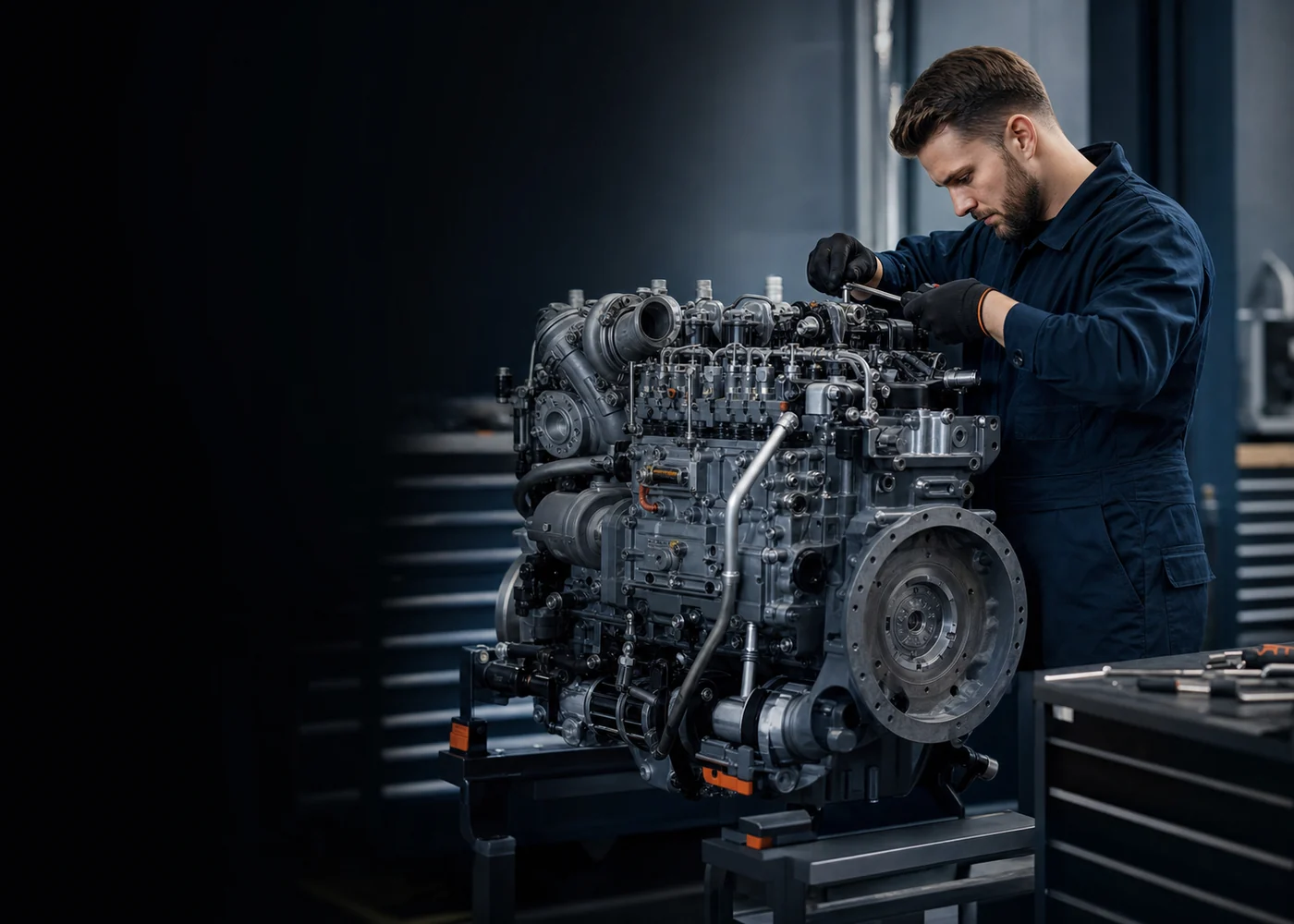
A diesel mechanic specialises in compression-ignition engines and the systems that feed, charge and clean them. The work covers fault diagnosis, component-level repair, performance restoration and complete engine overhaul across trucks, buses, machinery, generators and marine or rail applications.
The defining skill is diagnostic reasoning under uncertainty. Diesel faults frequently present as vague symptoms — poor starting, loss of power, excessive consumption, smoke — that can originate in fuel delivery, air supply, compression, timing or aftertreatment. Isolating the cause requires method, measurement and interpretation rather than parts substitution.
Compared with a truck mechanic, the diesel mechanic goes deeper but narrower. A truck mechanic maintains the entire vehicle including brakes, chassis and driveline; a diesel mechanic may spend a full day on a single injection system. Many workshops need both, and the two complement each other well.
Compared with a heavy equipment mechanic, the diesel mechanic focuses on the powerplant rather than hydraulics, undercarriage or attachments — though the engines in construction machinery fall squarely within their scope.
You need a dedicated diesel mechanic when engine work is frequent enough to justify the specialisation, or when misdiagnosis is already costing you more than the salary would.
Relevant systems and equipment
Profiles may include experience with:
What employers should verify
Balkan Mechanic does not certify candidates. Use this list as the basis for your own screening and interviews.
Relevant industries

How recruitment continues
Pin down the specialization, systems and experience level you need.
Review mechanic profiles that match your vehicles and machines.
Describe the role, systems and shift requirements clearly.
Assess candidate information and verify qualifications.
Manage interviews and the rest of the workflow in one place.
Related mechanic profiles
Whole-vehicle commercial maintenance, including brakes and chassis.
View profileMachinery specialists covering hydraulics alongside engines.
View profilePassenger fleets with diesel and alternative powertrains.
View profileFarm equipment with heavy diesel drivetrains.
View profilePreventive maintenance across mixed vehicle fleets.
View profilePlant equipment including stationary diesel units.
View profileRelevant guides
FAQ
Explore profiles, publish your vacancy and manage applications in one structured platform.