Automotive MechanicsAutomotive MechatronicsTruck MechanicsDiesel MechanicsHeavy EquipmentView all mechanics
Automotive ServiceTransport & LogisticsFleet OperationsConstruction EquipmentView all industries
Western BalkansHiring GuidesAboutContact Explore Mechanic Profiles
English Deutsch

Industry

Recruit Mechanics for Manufacturing Companies

Find mechanic profiles for production environments — industrial machinery specialists in bearings, gearboxes, conveyors, alignment and the preventive maintenance that protects output.
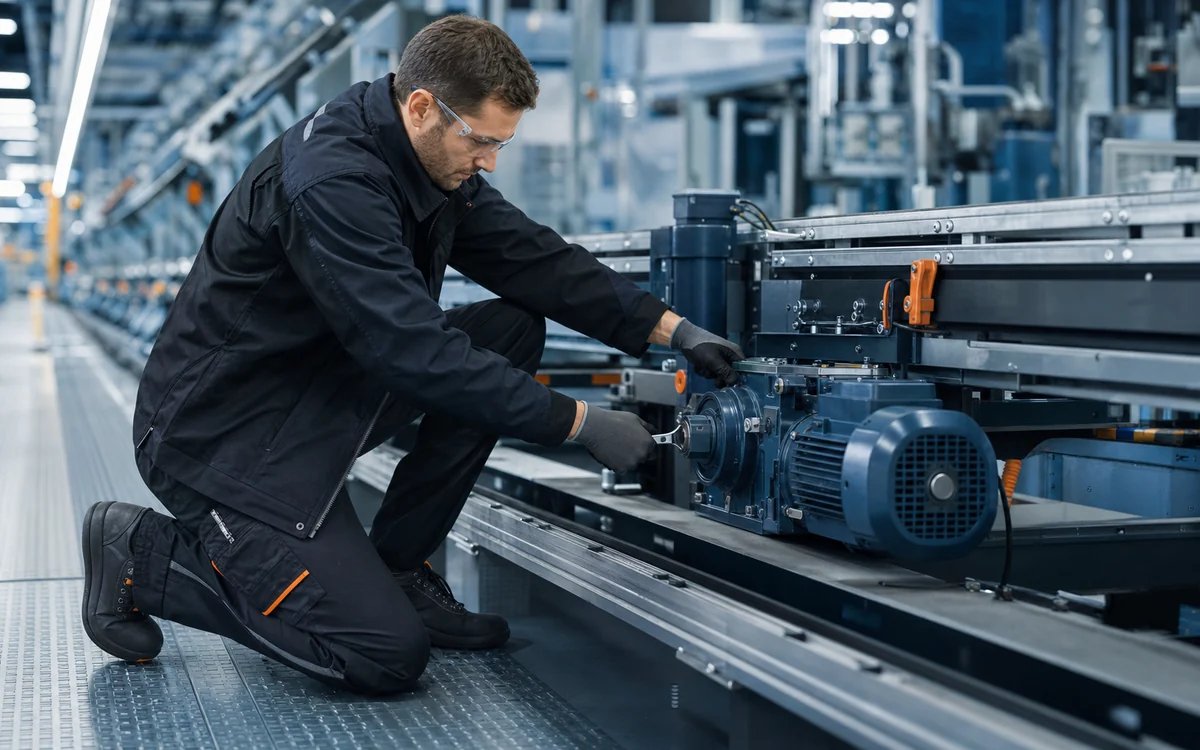
Manufacturing plant with machinery maintenance in progress.

Industry challenges

Maintenance capability is measured in minutes of lost production

In manufacturing, the cost of a maintenance shortfall is not the repair. It is the output that did not happen while the line was stopped, and that figure accumulates by the minute.

Unplanned line stoppages

A failed bearing or drive halts an entire production line, and the hourly cost of that stoppage usually dwarfs the repair itself.

Preventive work sacrificed

Planned maintenance is the first casualty of an overstretched team — which reliably increases the unplanned failures that stretched it.

Slow diagnosis under pressure

With production waiting and management watching, isolating a fault quickly and correctly matters far more than mechanical strength.

Premature component wear

Misaligned couplings and drives destroy bearings and seals repeatedly until someone diagnoses the underlying cause.

Shutdown windows overrun

Planned maintenance windows are fixed. Insufficient staffing turns a weekend shutdown into a Monday production loss.

Maintenance history not captured

Without records, recurring failures are never recognised as patterns and the same fault is repaired indefinitely.

AdvertisementCandidate Force — explore mechanic profiles and publish vacancies.

The cost of downtime

The arithmetic of a stopped production line

Production lines are usually costed per hour of output, and that figure typically makes even a short unplanned stoppage more expensive than a substantial share of an annual maintenance salary.

The compounding factor is that reactive maintenance generates more reactive maintenance. A bearing replaced without correcting the misalignment that destroyed it will fail again, and each failure costs another stoppage.

Plants that invest in precision — proper alignment, correct bearing fitting, disciplined lubrication — generally see failure intervals lengthen substantially. That outcome depends entirely on the competence of the people doing the work.

Working environments

Where your mechanics will work

Production floor

Working around a running line, often under time pressure with production waiting. Requires composure, method and awareness of the operational consequences of every decision.

Planned shutdowns

Fixed maintenance windows with a defined scope and no tolerance for overrun. Rewards preparation, precision and the ability to work steadily to a plan.

Maintenance requirements

What industrial maintenance involves

The work combines scheduled preventive maintenance with rapid response when production stops.

  • Scheduled preventive maintenance on production machinery
  • Bearing, seal, shaft and coupling replacement
  • Gearbox and drive system servicing
  • Precision alignment of couplings, shafts and drives
  • Conveyor and material handling system maintenance
  • Pump, compressor and fluid system servicing
  • Hydraulic and pneumatic system repair
  • Planned shutdown and overhaul execution
  • Maintenance history and failure pattern documentation
AdvertisementBalkan Recruiters — recruitment services for European employers.

Skills employers should verify

What to verify when hiring for a production plant

Balkan Mechanic does not certify candidates. Use this as the basis for your own screening.

  • Formal qualification in industrial or mechanical technology
  • Types of production machinery and industries previously worked in
  • Precision alignment competence and the methods actually used
  • Bearing fitting practice — method matters enormously for service life
  • Root cause diagnosis rather than repeated part replacement
  • Experience working within fixed planned shutdown windows
  • Familiarity with preventive maintenance systems and documentation
  • Composure and judgement during production stoppages
  • Shift availability, since many plants run continuously
  • Work authorization requirements for your country

Shift and emergency coverage

Continuous production and shift patterns

Most production plants need maintenance coverage across the shift pattern, and this is a decisive factor for candidates. A three-shift rotation, weekend shutdown work or on-call duty changes the role fundamentally compared with a day position. State the pattern, the rotation and the compensation explicitly in the vacancy. Plants that are vague about shift expectations consistently report higher early turnover than those that are direct about them from the first advert.

How recruitment continues

From vacancy to shortlist

Define the mechanic profile

Pin down the specialization, systems and experience level you need.

Explore available profiles

Review mechanic profiles that match your equipment.

Publish the vacancy

Describe the role, systems and shift requirements clearly.

Review details and applications

Assess candidate information and verify qualifications.

Continue through Candidate Force

Manage interviews and the rest of the workflow in one place.

FAQ

Frequently asked questions

Root cause thinking. An average mechanic replaces the failed bearing; a strong one determines why it failed and eliminates the misalignment, contamination or lubrication problem behind it. Ask candidates about a recurring failure they permanently resolved.
Ask which method they use and to what tolerance. Candidates describing laser alignment, dial indicators, soft foot checks and thermal growth are describing genuine practice. Answers about aligning by eye indicate limited precision experience.
Generally not, and they should not without appropriate qualification. Electrical work usually belongs to a maintenance technician or electrician. Define the boundary clearly in your job description to avoid mismatched expectations on both sides.
Somewhat. Mechanical fundamentals transfer well, but hygiene requirements in food production or the pace of high-speed packaging take time to adapt to. Weigh transferable competence against sector familiarity based on your own priorities.
The titles are often used interchangeably. Industrial machinery mechanic tends to imply production equipment specifically, while maintenance technician may extend to building services, instrumentation and control. Describe the actual equipment rather than relying on the title.
Ideally yes. Mechanics who know the equipment produce more realistic scope and duration estimates than planners working from documentation alone, and shutdowns planned with their input overrun considerably less often.

Protect your production output

Explore profiles, publish your vacancy and manage applications in one structured platform.

Explore Mechanic Profiles