
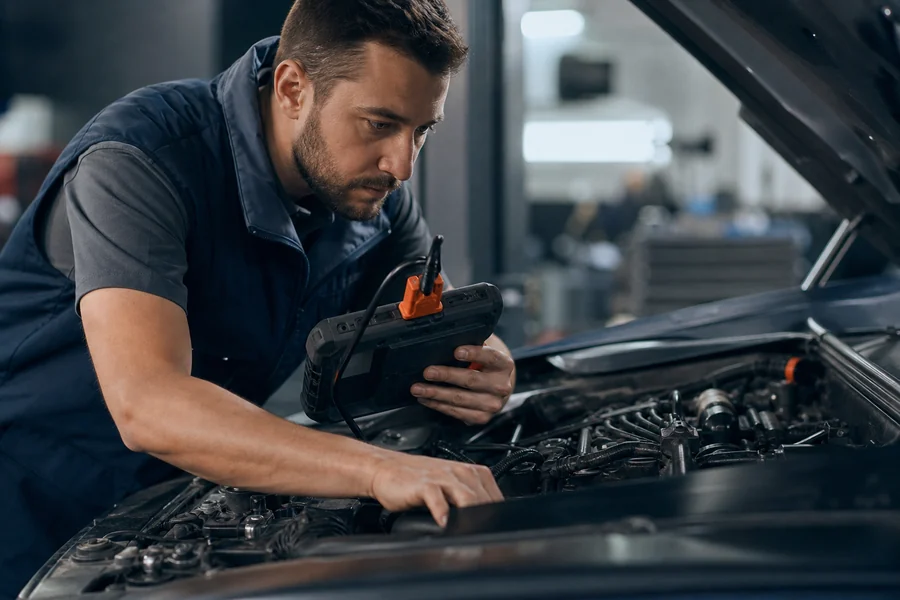
Service workshops
Lifts, scan tools, service orders and customer turnaround deadlines. Typical for automotive and mechatronics profiles.
Mechanic profiles
“Mechanic” is not one profession. It covers distinct trades that work on different vehicles, machines and systems — and hiring the wrong specialization costs you months. This hub explains each profile so you can define the role before you start recruiting.
Categories
Each profile below describes what the role actually does, which systems it covers, how it differs from adjacent trades and what you should verify before hiring.
Inspection, diagnostics and repair of passenger and light commercial vehicles — brakes, suspension, steering, transmission and routine service.
View profileCombined mechanical and electronic vehicle work — sensors, control units, vehicle networks, fault code analysis and calibration.
View profileHeavy commercial vehicles — diesel engines, air brake systems, transmissions, axles, trailer connections and roadworthiness inspections.
View profileDiesel powertrains across vehicles and machinery — fuel injection, turbocharging, emission systems, compression diagnostics and overhaul.
View profilePublic transport fleets — bus chassis, door systems, air brakes, passenger safety systems and shift-based depot operations.
View profileExcavators, loaders, cranes, bulldozers and graders — hydraulic and pneumatic systems, undercarriages and field service.
View profileSite equipment — powertrains, hydraulics, attachments, electronic control systems, on-site diagnostics and safety inspections.
View profileProduction machines — bearings, gearboxes, conveyors, pumps, mechanical alignment, fault diagnosis and preventive maintenance.
View profileTractors, harvesters and farm equipment — hydraulics, diesel engines, drive systems, attachments and seasonal field service.
View profileMixed vehicle fleets — preventive maintenance, inspections, repair scheduling, breakdown response and downtime reduction.
View profile
Understanding the split
The most common hiring mistake is treating every mechanic as one talent pool. The two broad families work in different environments, on different systems, to different tolerances.
Automotive, mechatronics, truck, bus, diesel and fleet mechanics work on vehicles that move on roads. Their day revolves around engines, drivetrains, braking systems and increasingly on electronic diagnostics, in a workshop with lifts, scan tools and a service-order workflow.
Heavy equipment, construction, agricultural and industrial machinery mechanics work on machines that produce or move material. Hydraulics, pneumatics, gearboxes, bearings and structural wear dominate, often with field service and heavier lifting.
Working environments
Environment shapes which candidates fit. A technician used to a clean dealership bay and one used to field repair on a construction site bring very different working habits.
Lifts, scan tools, service orders and customer turnaround deadlines. Typical for automotive and mechatronics profiles.
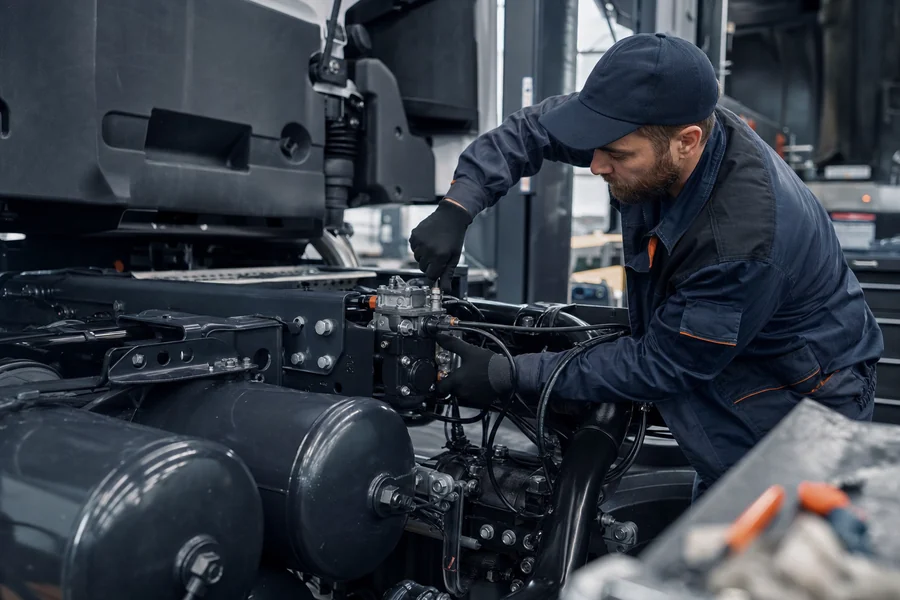
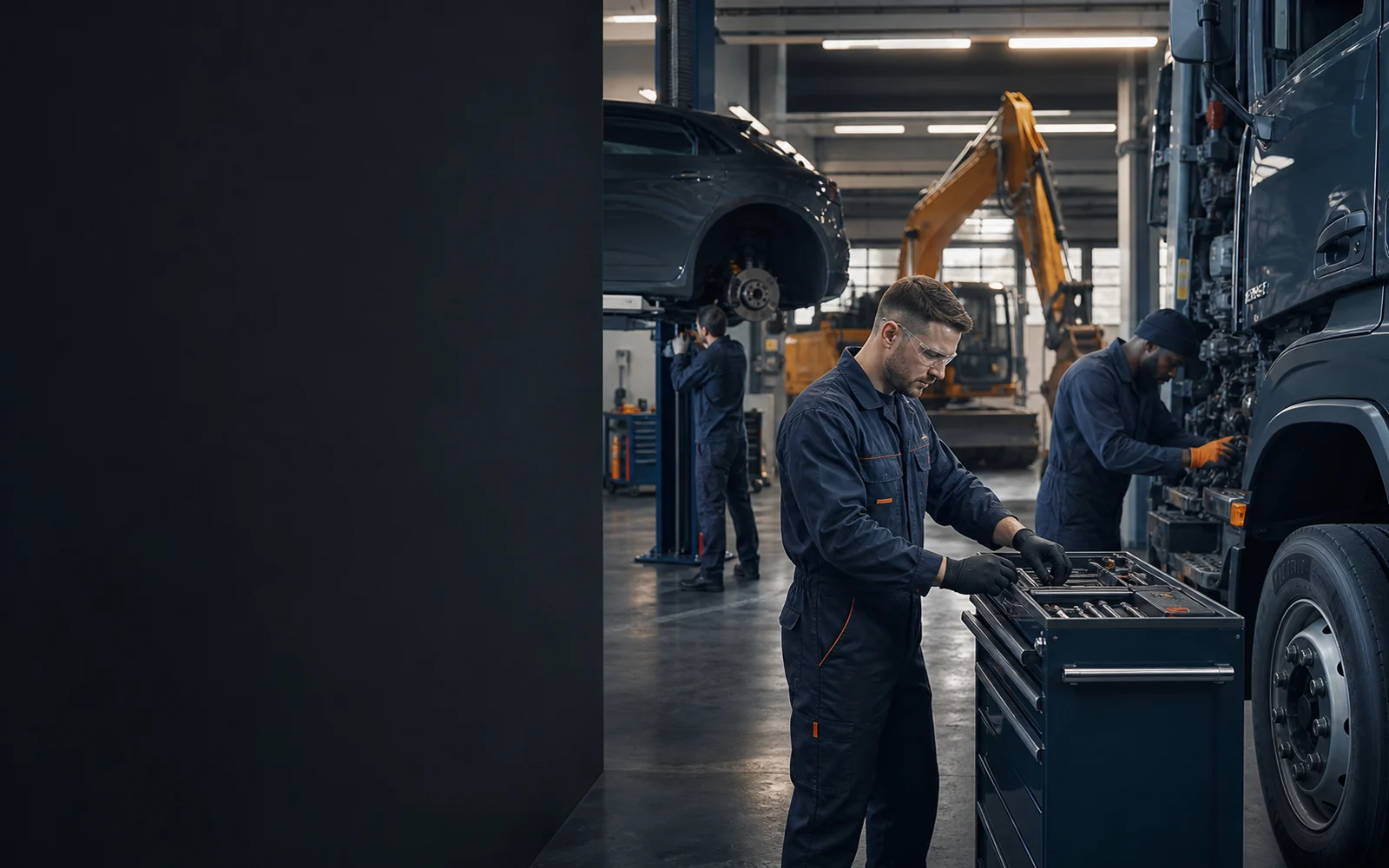
Tall bays, heavy tooling, shift patterns and fleet availability targets. Typical for truck, bus and fleet mechanics.
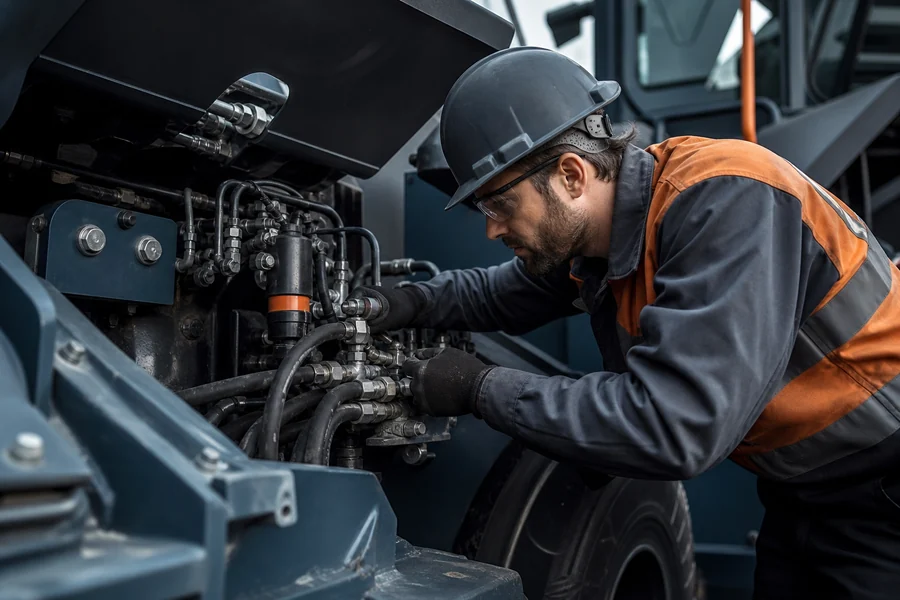
Mobile toolkits, weather exposure and autonomous problem solving. Typical for heavy equipment and construction machinery.
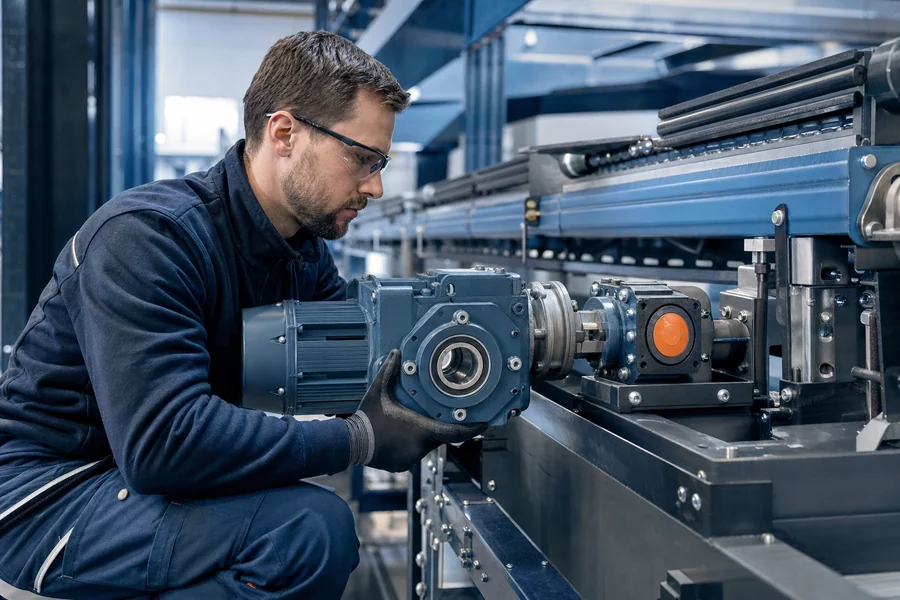
Planned shutdowns, precision alignment and documented maintenance regimes. Typical for industrial machinery mechanics.
Relevant industries
| Industry | Most relevant mechanic profiles |
|---|---|
| Automotive service | Automotive mechanics, automotive mechatronics technicians |
| Transport & logistics | Truck mechanics, diesel mechanics, fleet mechanics |
| Fleet operations | Fleet mechanics, truck mechanics, automotive mechanics |
| Construction equipment | Heavy equipment mechanics, construction machinery mechanics |
| Agricultural machinery | Agricultural machinery mechanics, diesel mechanics |
| Manufacturing | Industrial machinery mechanics, maintenance mechanics |
Due diligence
Balkan Mechanic does not certify candidates. Profiles may include experience with the systems described on each page, but verification always sits with the employer.
Read the assessment guide
The process
Use this hub to pin down the exact specialization.
Review mechanic profiles matching your systems.
Describe requirements clearly and precisely.
Assess details and verify qualifications.
Manage the workflow through Candidate Force.
Western Balkans
The Western Balkans has established vocational education pathways in automotive and industrial trades, alongside active service, transport and manufacturing sectors.
FAQ
Continue on Candidate Force to explore profiles, publish your vacancy and manage applications.