Automotive MechanicsAutomotive MechatronicsTruck MechanicsDiesel MechanicsHeavy EquipmentView all mechanics
Automotive ServiceTransport & LogisticsFleet OperationsConstruction EquipmentView all industries
Western BalkansHiring GuidesAboutContact Explore Mechanic Profiles
English Deutsch

Mechanic profile

Hire Heavy Equipment Mechanics from the Western Balkans

Explore mechanic profiles with experience in excavators, loaders, cranes and bulldozers — hydraulic and pneumatic systems, undercarriages, diesel powertrains and on-site field service.
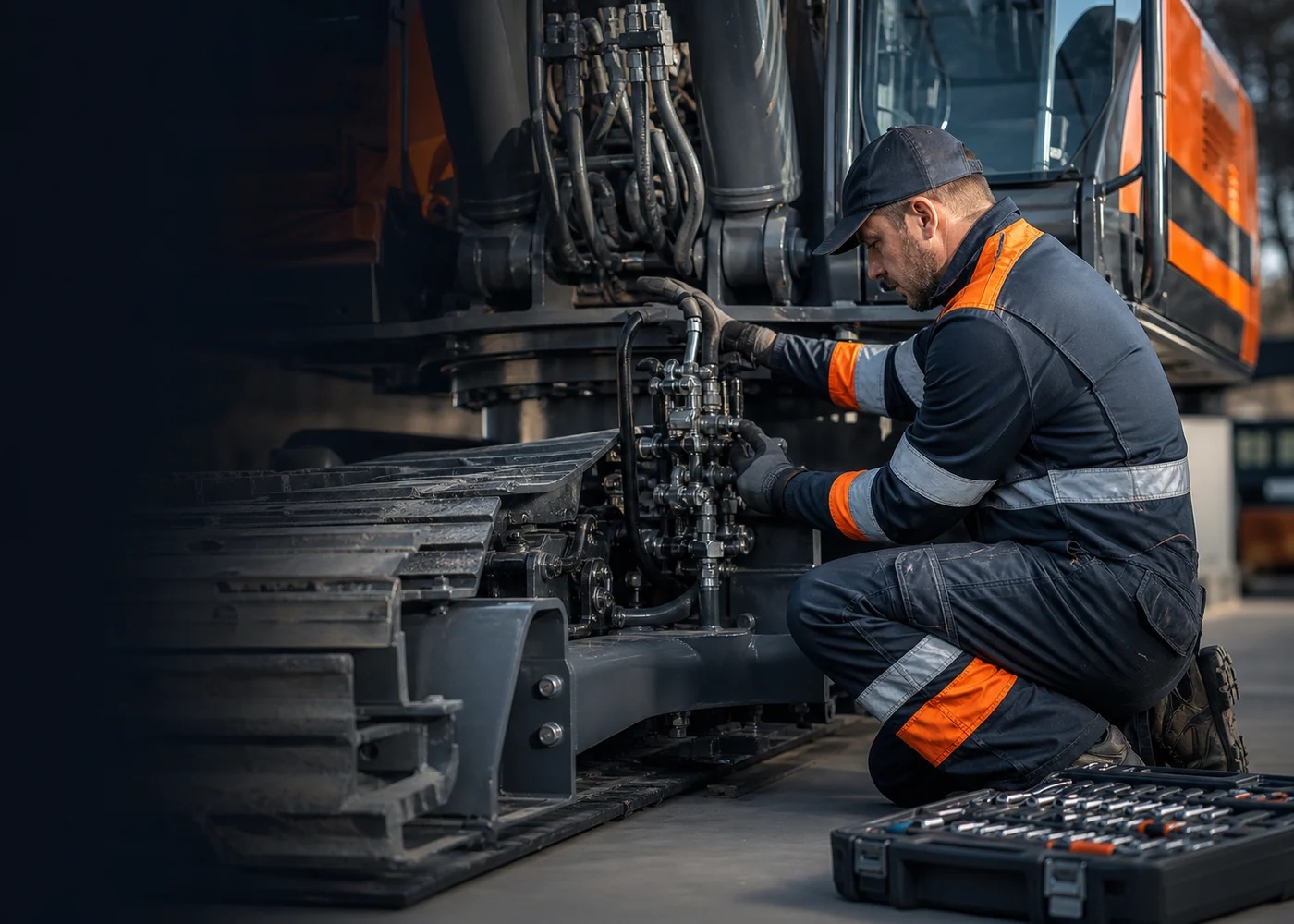
Heavy equipment mechanic servicing an excavator.

The employer challenge

A stopped machine stops the whole site, not just itself

Heavy equipment failures cascade. When an excavator goes down, the trucks waiting on it, the crew around it and the schedule behind it all stop with it.

Site-wide productivity loss

One immobilised machine idles the equipment and crew that depend on it, multiplying the cost of a single failure.

Slow response to field breakdowns

Machines fail where they work, not where your workshop is. Without mobile capability, recovery takes days instead of hours.

Hydraulic faults left unresolved

Hydraulic diagnosis requires specific understanding of pressure, flow and circuit logic that general mechanics often lack.

Deferred undercarriage wear

Track and undercarriage neglect is invisible until it becomes one of the most expensive repairs on the machine.

Costly manufacturer service calls

Every callout to an external specialist carries travel, hourly and waiting costs that in-house capability avoids.

Rental fleet availability gaps

For rental operators, an unserviceable machine is directly lost revenue and a disappointed customer.

AdvertisementCandidate Force — explore mechanic profiles and publish vacancies.

Role overview

What a heavy equipment mechanic actually does

A heavy equipment mechanic maintains and repairs large mobile machinery — excavators, wheel loaders, bulldozers, graders, cranes and similar plant. The role covers scheduled servicing, fault diagnosis and repair across hydraulic systems, diesel powertrains, transmissions, undercarriages and increasingly the electronic control systems that govern them.

Hydraulics dominate the work. Most functions on these machines are hydraulically driven, so diagnosing a performance complaint means reasoning about pressure, flow, relief settings and internal leakage rather than simply inspecting for visible damage.

Field service is normal rather than exceptional. Machines are repaired where they stand, often outdoors and in poor conditions, which demands self-sufficiency, planning and sound judgement about what can safely be done on site.

Compared with a truck mechanic, the systems differ substantially: hydraulic circuits and undercarriages instead of air brakes and road-legal inspection regimes. Physical demands are higher and the working environment less controlled.

Compared with a construction machinery mechanic, the two overlap heavily. Heavy equipment is the broader term, spanning quarrying, mining and material handling as well as construction.

Typical responsibilities

  • Diagnosing hydraulic system faults using pressure and flow measurement
  • Servicing and repairing pumps, motors, valves and cylinders
  • Maintaining diesel engines and cooling systems under heavy duty cycles
  • Working on transmissions, final drives and axles
  • Inspecting and replacing undercarriage components
  • Repairing attachments, booms and structural components
  • Diagnosing electronic control and monitoring systems
  • Performing scheduled servicing to manufacturer intervals
  • Carrying out field repairs safely at the work site
  • Documenting machine hours, findings and completed work

Relevant systems and equipment

Systems a heavy equipment mechanic works with

Profiles may include experience with:

Hydraulic pumps & motorsControl & relief valvesHydraulic cylindersPneumatic systemsDiesel enginesPowershift transmissionsFinal drivesUndercarriages & tracksAttachments & couplersElectronic machine controlPressure & flow test equipmentWelding & fabrication

What employers should verify

Check these before you hire a heavy equipment mechanic

Balkan Mechanic does not certify candidates. Use this list as the basis for your own screening and interviews.

  • Formal qualification in machinery, construction equipment or mechanical technology
  • Machine types and manufacturers previously serviced
  • Genuine hydraulic diagnostic ability, tested with a scenario
  • Experience with pressure and flow measurement, not just component swapping
  • Undercarriage inspection and wear assessment competence
  • Field service experience and ability to work independently on site
  • Welding and fabrication skills, often required for structural repair
  • Safety certification relevant to site work in your country
  • Driver licence categories and willingness to travel between sites
  • Work authorization requirements for your country
AdvertisementBalkan Recruiters — recruitment services for European employers.

How recruitment continues

From vacancy to shortlist

Define the mechanic profile

Pin down the specialization, systems and experience level you need.

Explore available profiles

Review mechanic profiles that match your vehicles and machines.

Publish the vacancy

Describe the role, systems and shift requirements clearly.

Review details and applications

Assess candidate information and verify qualifications.

Continue through Candidate Force

Manage interviews and the rest of the workflow in one place.

FAQ

Frequently asked questions

Present a symptom — an excavator with slow boom movement but normal engine performance — and ask how they would investigate. Look for a structured answer involving pressure testing, flow measurement and isolating internal leakage, rather than an immediate proposal to replace the pump.
Often yes. Structural repair to buckets, booms and frames is routine, particularly for field service roles where returning the machine to a workshop is impractical. Specify it in the vacancy if you require it.
The profiles overlap substantially. Heavy equipment is the broader category, extending to quarrying, mining and material handling. If your machines are exclusively construction plant, either title will attract suitable candidates.
Hydraulic and mechanical fundamentals transfer well between brands. Electronic machine control systems and diagnostic software are more manufacturer-specific, so expect some ramp-up time when the brand changes.
Decide before you advertise, because it changes the candidate profile considerably. Field service demands independence, driving, planning and comfort working outdoors. Workshop roles suit candidates who prefer controlled conditions and heavier rebuild work.
Site work typically requires safety certification, and working under raised equipment or with stored hydraulic pressure carries serious risk. Verify safety awareness explicitly — a candidate who cannot describe how they secure a machine before working under it is a genuine concern.

Find Heavy Equipment Mechanics through Candidate Force

Explore profiles, publish your vacancy and manage applications in one structured platform.

Explore Mechanic Profiles
